 labahan
Customers
Laundry packaging that impresses customers: fold, seal, label, present
By the Labahan team · October 18, 2026 · 5 min read
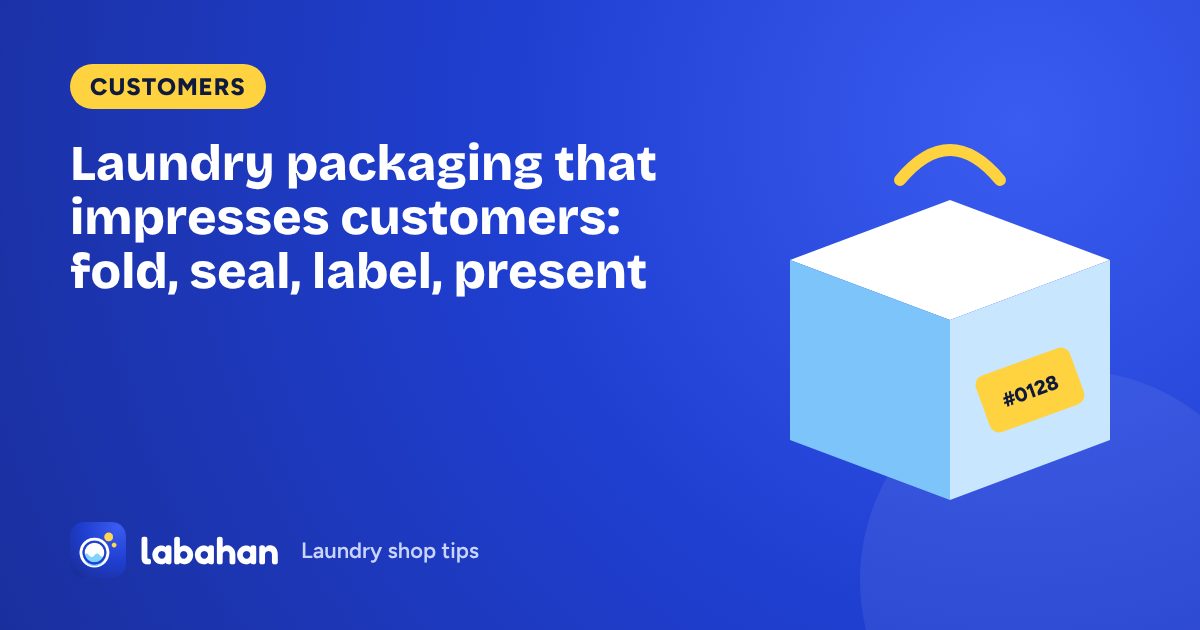
The customer never sees your washers working. What they see is the bag you hand over at the counter. Neat, clean, clearly labelled packaging tells them their laundry was handled with care, even before they open it at home.
Why packaging matters more than you think
Two shops can wash and dry exactly the same way. The one that hands back a neat, sealed, labelled bag looks more careful, gets fewer complaints and finds it easier to keep its prices. Packaging is also the last step before release, so it is your last chance to catch a mistake: a missing sock, a damp collar or a bag with the wrong number.
The packing line, step by step
1. Fold neatly and stack by type
Customers judge the whole load by the top layer. Fold to the same size so the stack stays square, and group like with like: shirts together, pants together, towels together, underwear and socks in a small inner bag so they don’t get lost in the pile. Put heavy items (jeans, towels) at the bottom and light ones on top so nothing gets crushed. For a full how-to, see our guide on how to fold laundry the professional way.
2. Use a clean, sealed bag, or the customer’s own
- Clean plastic: no dust, no torn corners, no old writing. A sealed or tied bag says “nobody has touched this since it was folded.”
- Fully dry before sealing. Sealing a load that is still slightly damp traps moisture and causes that musty smell by the time the customer opens it. See why laundry smells musty.
- Reusable bags: many suki bring their own eco bag or laundry bag. Pack into it neatly and tag it the same way. Some customers like this better than plastic, and it saves you the cost of a bag.
3. Label it so nobody has to guess
A good label answers three questions at a glance: whose is it, which load, and how many bags. Write or print the stub number, the customer’s name and the bag count (“Bag 2 of 3”) on every bag, not only the first. This is what stops the classic mix-up at the ready shelf. More on this in how to stop lost and mixed-up laundry.
4. Scent: pleasant, not overpowering
Most customers expect their laundry to smell clean when they open the bag. That comes from proper rinsing, the right amount of fabcon and drying fully, not from extra perfume. If a customer has a favourite scent or asks for no fabcon (for babies or sensitive skin), note it on the stub and follow it every time. Small things like this are why suki come back.
5. Present special items properly
- Pressed items on hangers. Polo shirts, uniforms and barong that were pressed should go on a hanger with a thin cover, not folded back into the pile.
- Comforters and blankets: folded into their own large bag, labelled like any other bag.
- Delicate items: on top, or in their own small bag, so they don’t get squashed.
- Small items found in pockets (coins, keys, receipts): in a small clear pouch taped to the label, with a note. Customers remember this.
If hangers and covers cost you money, list them as an add-on on your price list instead of quietly absorbing the cost.
Branded bags: walking advertising, at a price
A bag with your shop name and number gets carried through the barangay, sits in the customer’s house and gets reused. That is real advertising. But it costs more than plain plastic, every single load, so do the math first.
In this example, fully printed bags pay for themselves only if they bring in about 13 new regular customers a month (₱2,700 ÷ ₱212). A sticker with your logo and number on a plain bag needs only about 5. Many shops start with stickers or a rubber stamp, then move to printed bags once they know their numbers. The ₱53 profit per load comes from our cost per load example; use your own.
A packing checklist for staff
- Every item fully dry, including collars and seams
- Pockets checked; found items in a small pouch
- Count matches the stub (pieces or bags)
- Same fold size, stacked by type
- Heavy at the bottom, delicate on top
- Socks and underwear in a small inner bag
- Pressed items on hangers with a cover
- Bag is clean, untorn and sealed or tied
- Stub number, name and “Bag X of Y” on every bag
- Special notes followed (no fabcon, scent)
- Placed on the ready shelf in number order
How Labahan helps
In Labahan Manager, you can print a bag tag for every bag with the stub number, “Bag 2 of 3” and a QR, so labelling is quick and the same on every shift. At release, the app asks staff to confirm all bags were handed over. Hangers, covers or other extras can be set once as add-ons with their own price, and the customer gets a “Ready na po!” notification the moment the bags go on the shelf.